Diocletian's Palace
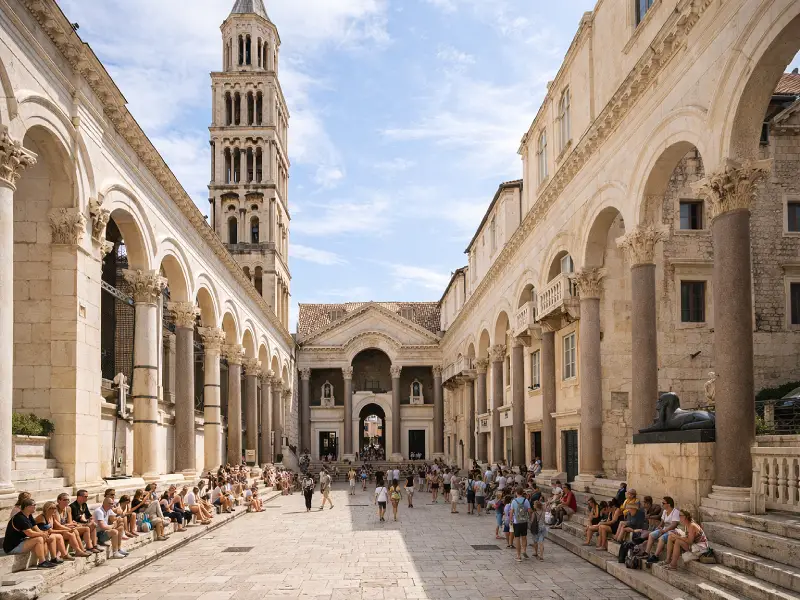
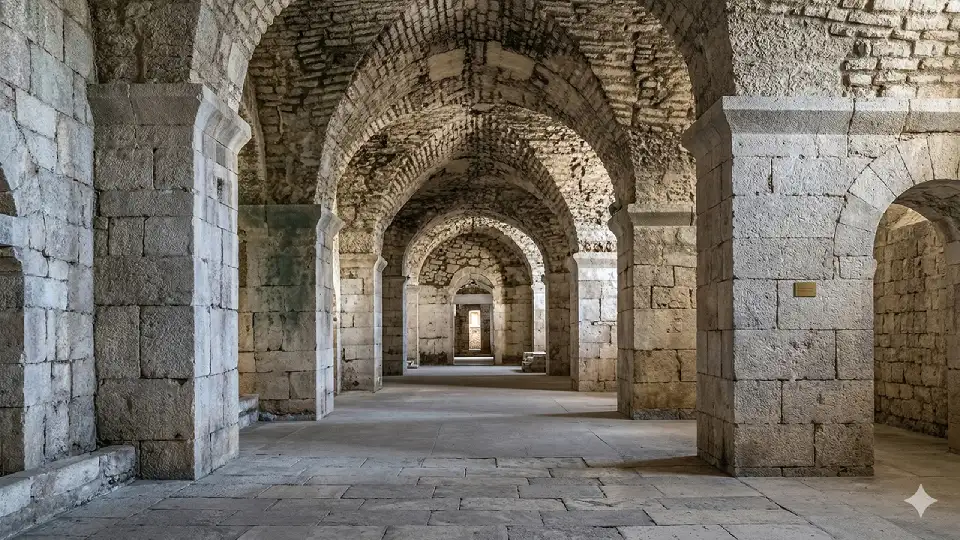
A 4th-century Roman palace where people actually live. Narrow marble streets, restaurants in ancient cellars, and the Cathedral of Saint Domnius. The best place to stay to be in the thick of it.
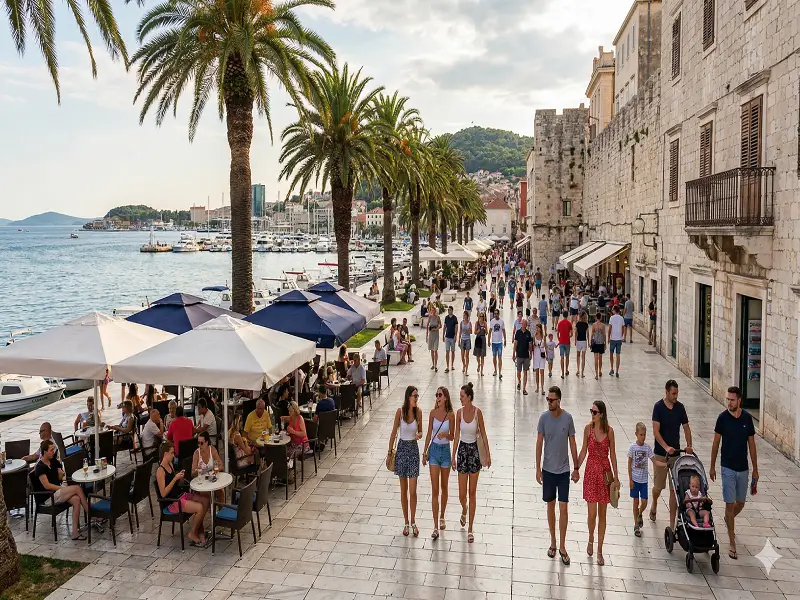
A living, breathing ancient monument where Roman walls, Venetian palaces and modern café culture coexist in extraordinary harmony on the Adriatic coast.
"All images on this website were generated by Gemini."
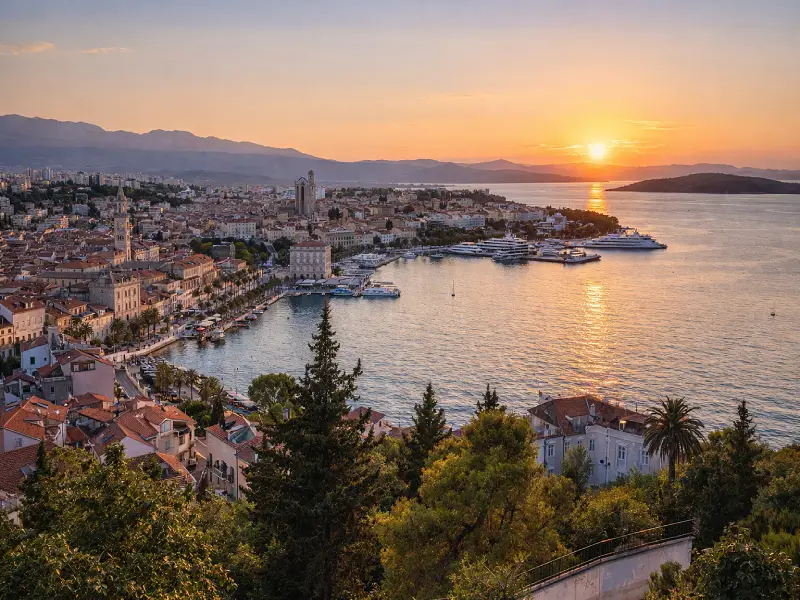
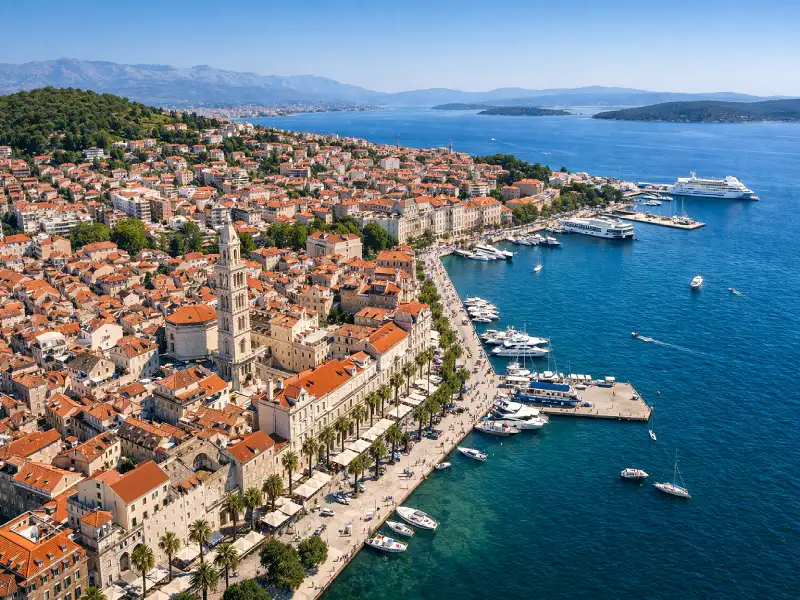
Split (Croatian: Split, Italian: Spalato) is the second-largest city in Croatia and the largest in the Dalmatia region, situated on a peninsula on the eastern Adriatic Sea.
What makes Split truly unique is that its historic centre is built inside the walls of Emperor Diocletian's ancient palace — a UNESCO World Heritage Site since 1979. Thousands of people live, work and socialise within the palace walls, making it one of the world's most extraordinary inhabited ancient monuments.
Beyond its Roman heritage, Split is a vibrant modern city — Croatia's main ferry hub, a thriving university city, and the gateway to over 50 Dalmatian islands.
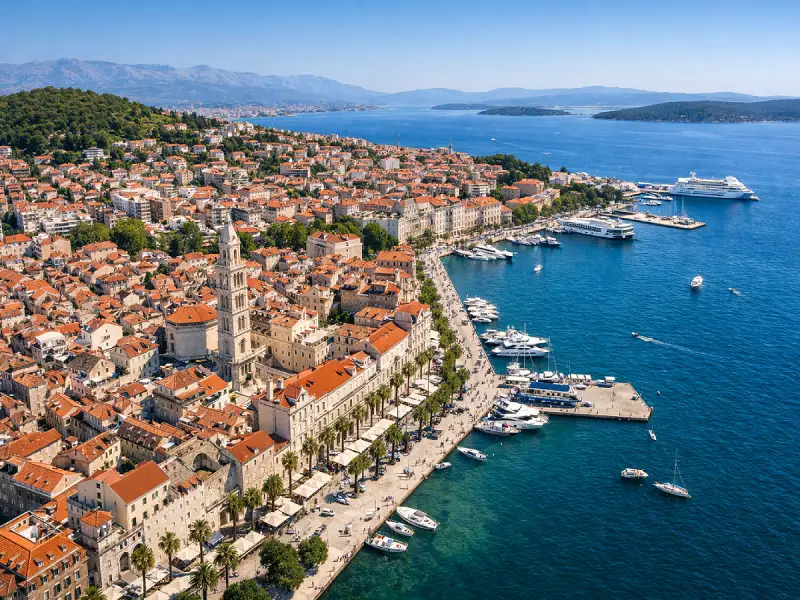
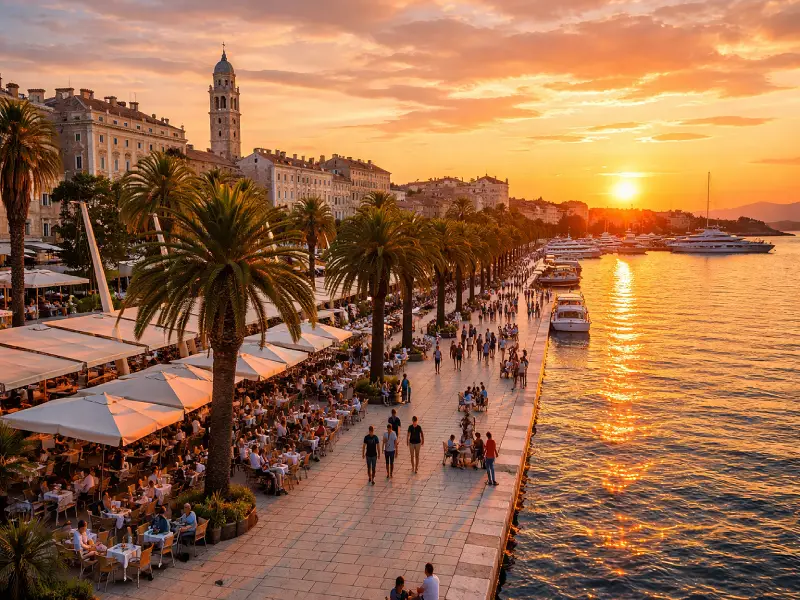
From the ancient palace walls to the golden hour light on the Riva — Split is one of Europe's most photogenic cities.
Split sits on a peninsula backed by the Mosor mountains, perfectly positioned as a hub for the Dalmatian coast and islands.
Each neighbourhood has its own distinct character — from ancient Roman streets to belle époque villas, lively student bars to quiet beachside café culture.
A 4th-century Roman palace where people actually live. Narrow marble streets, restaurants in ancient cellars, and the Cathedral of Saint Domnius. The best place to stay to be in the thick of it.
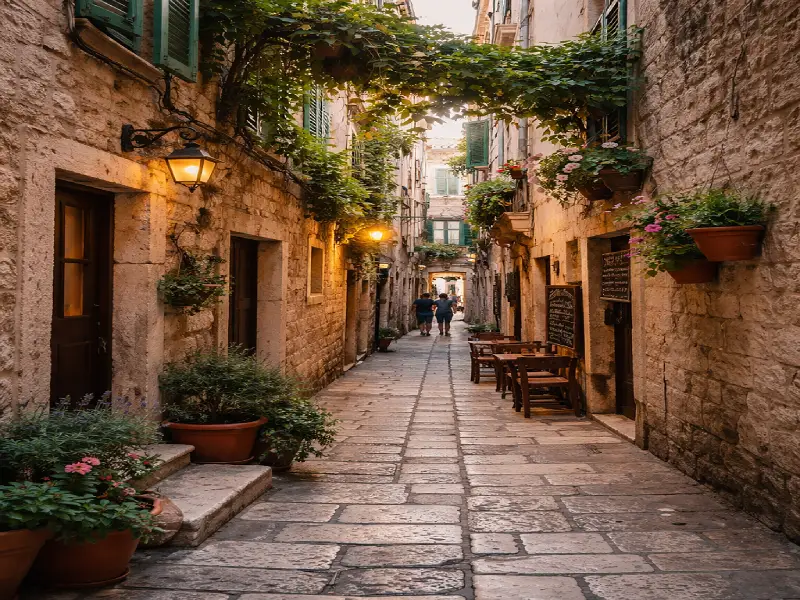
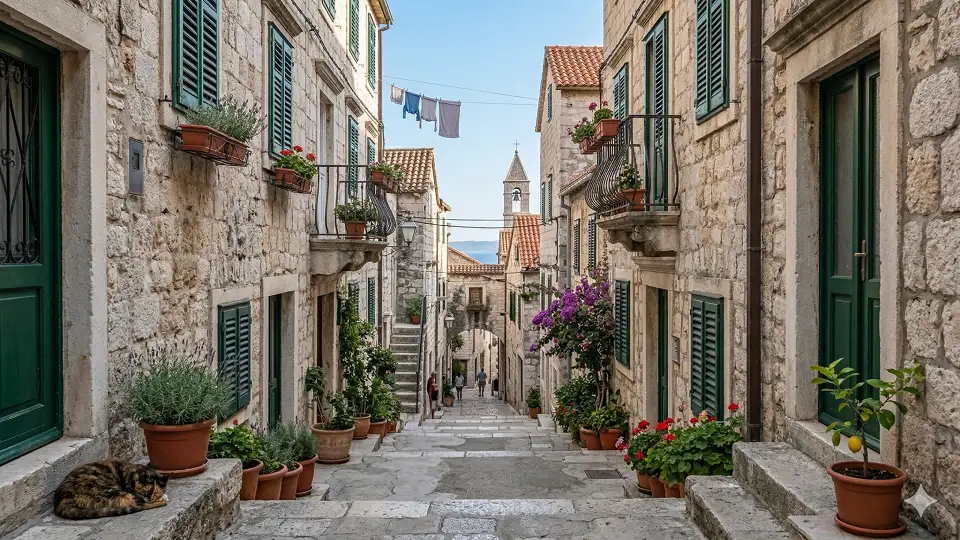
The oldest neighbourhood outside the palace walls — stone houses, cats on doorsteps, fig trees from walls, and some of Split's best traditional konoba restaurants.
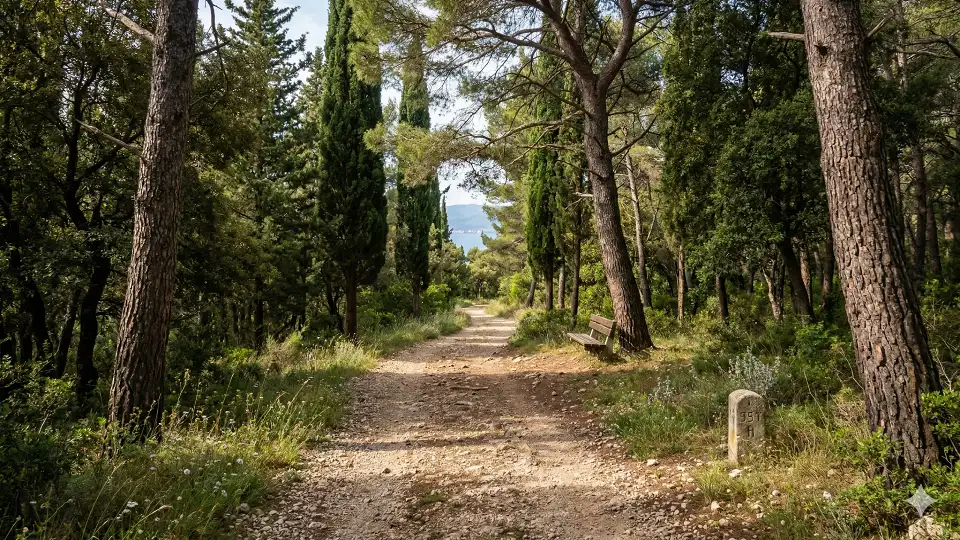
The most prestigious residential area — grand villas, the Meštrović Gallery, and the forested Marjan Hill with paths, viewpoints and secluded coves. Ideal for families.
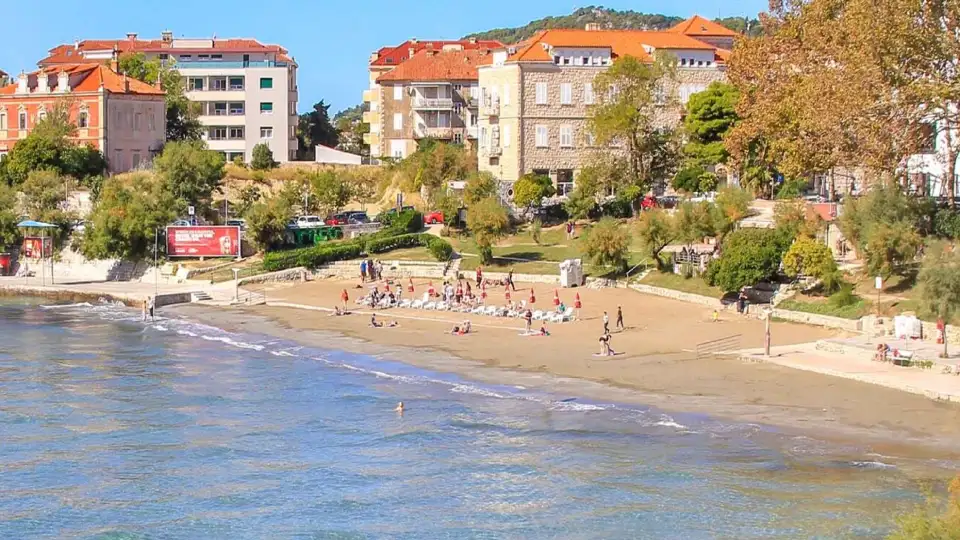
Famous for its shallow sandy beach and the uniquely Dalmatian sport of picigin. By night, the beach complex becomes Split's most popular nightlife strip.
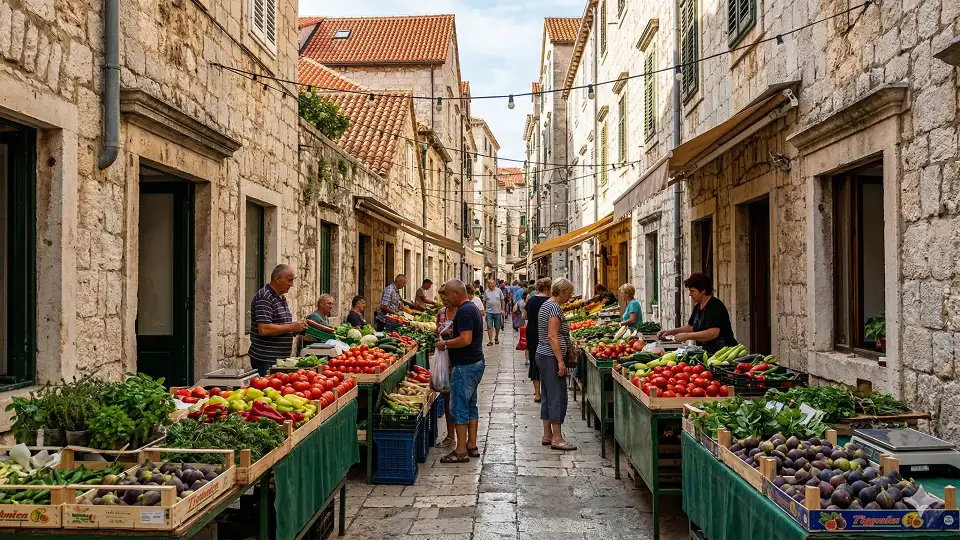
Where Split's residents actually live — real local bars, the daily market, and considerably cheaper accommodation. Great for longer stays on a budget.
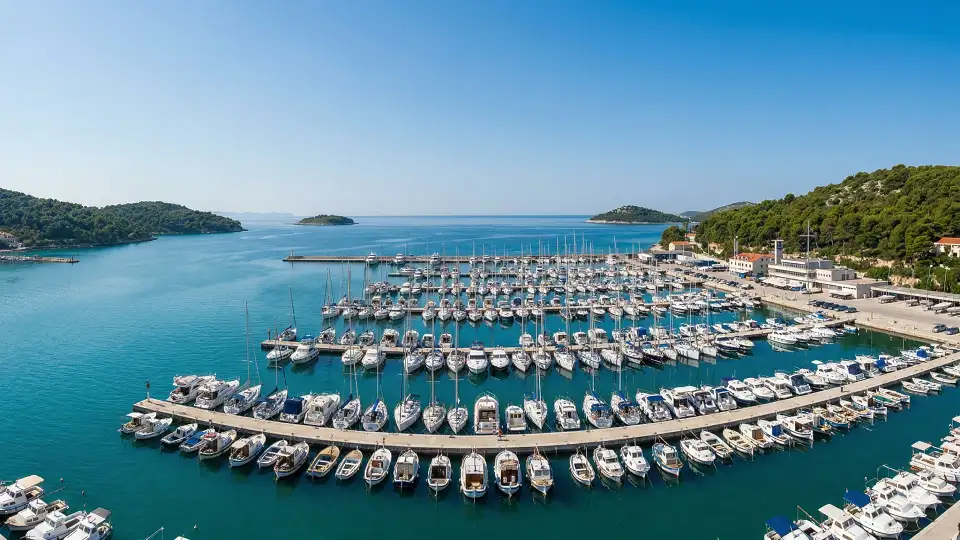
Modern districts with sports facilities, a large marina and quieter beaches. Firule has a lovely sheltered bay popular with families — authentic everyday Split.
Split enjoys a classic Mediterranean climate with nearly 2,800 sunshine hours per year — one of the sunniest cities in Europe.
| Month | Jan | Feb | Mar | Apr | May | Jun | Jul | Aug | Sep | Oct | Nov | Dec |
|---|---|---|---|---|---|---|---|---|---|---|---|---|
| High °C | 10 | 11 | 14 | 18 | 23 | 27 | 31 | 31 | 26 | 21 | 15 | 11 |
| Low °C | 5 | 5 | 7 | 11 | 15 | 19 | 22 | 22 | 18 | 14 | 9 | 6 |
| Sea °C | 14 | 13 | 13 | 15 | 18 | 22 | 25 | 26 | 24 | 21 | 18 | 16 |
| Rain mm | 80 | 65 | 68 | 58 | 46 | 25 | 20 | 28 | 68 | 95 | 120 | 105 |
| Sun hrs | 118 | 130 | 186 | 222 | 270 | 306 | 352 | 328 | 258 | 192 | 126 | 104 |
Split has a distinct identity — proudly Dalmatian first, Croatian second. Life is lived outdoors, at a relaxed pace, with fierce local pride.
Croatian is the official language but English is very widely spoken, especially among younger people. A few Croatian phrases go a long way — locals appreciate the effort.
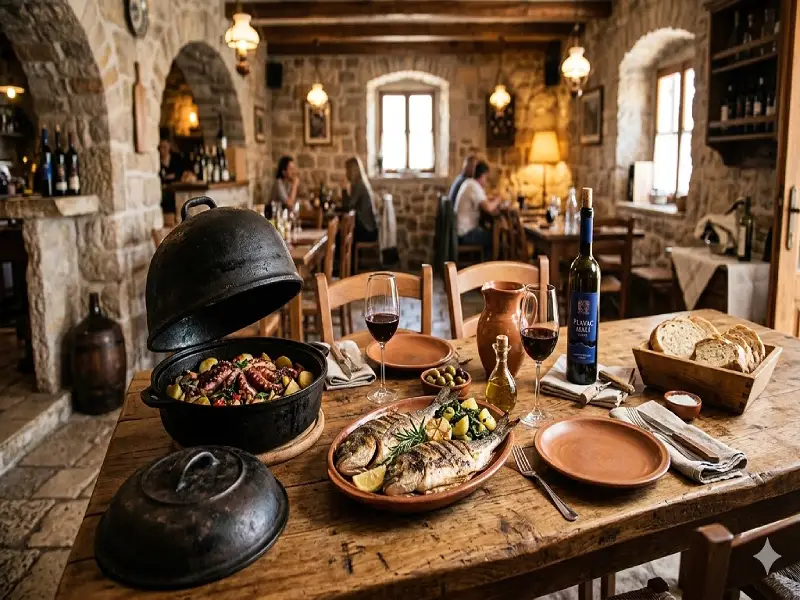
Dalmatian cuisine is defined by simplicity and freshness — olive oil, fresh fish, grilled meats, local cheese and excellent wine are the pillars of every meal.