Nature · Free
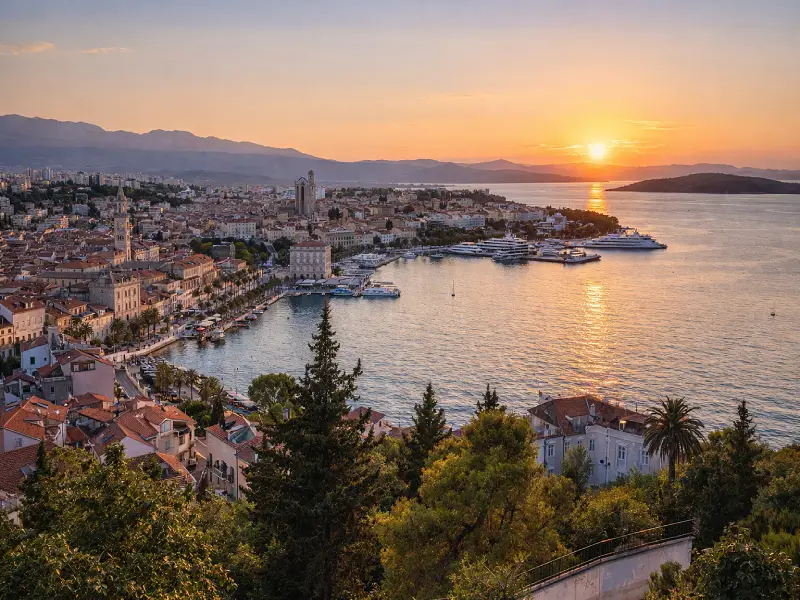
Marjan Hill
A forested peninsula rising 178m — Split's green lungs. Hiking trails, viewpoints, small chapels and a tiny beach at the tip. The best free view in the city is from Telegrin summit.
From one of the world's most extraordinary Roman monuments to secluded forest trails and sun-drenched promenades — Split rewards every kind of explorer.
"All images on this website were generated by Gemini."
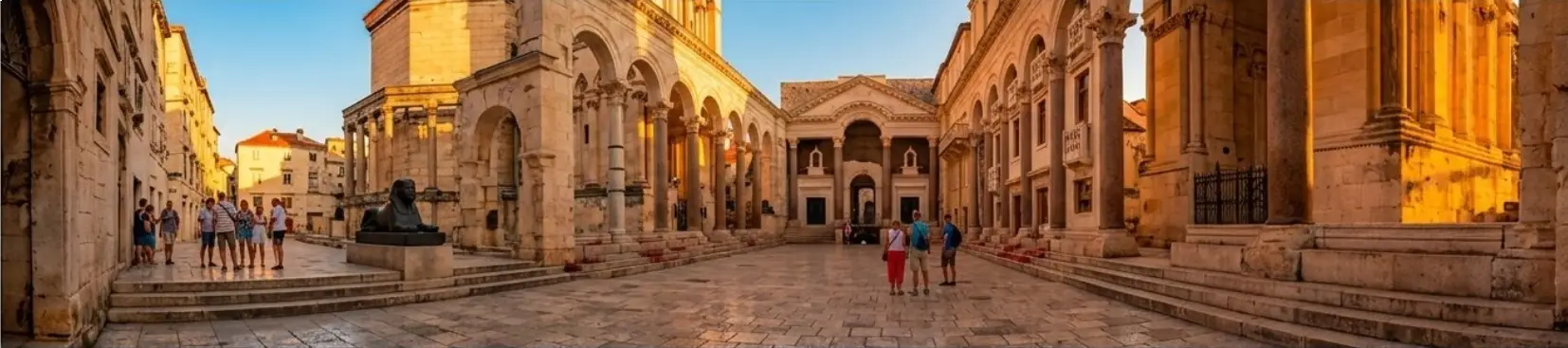
Built between 295–305 AD as retirement residence for Emperor Diocletian, this vast Roman fortress covers nearly 40,000 m² of the city centre. Unlike most ancient monuments, it is not a ruin — it is alive. Over 200 buildings are squeezed within its walls, including homes, restaurants, bars, the Cathedral of Saint Domnius (built inside Diocletian's own mausoleum) and the Temple of Jupiter. Wander its marble-paved lanes at any hour and you will find something extraordinary. Arrive early morning for an almost mystical experience before the crowds.
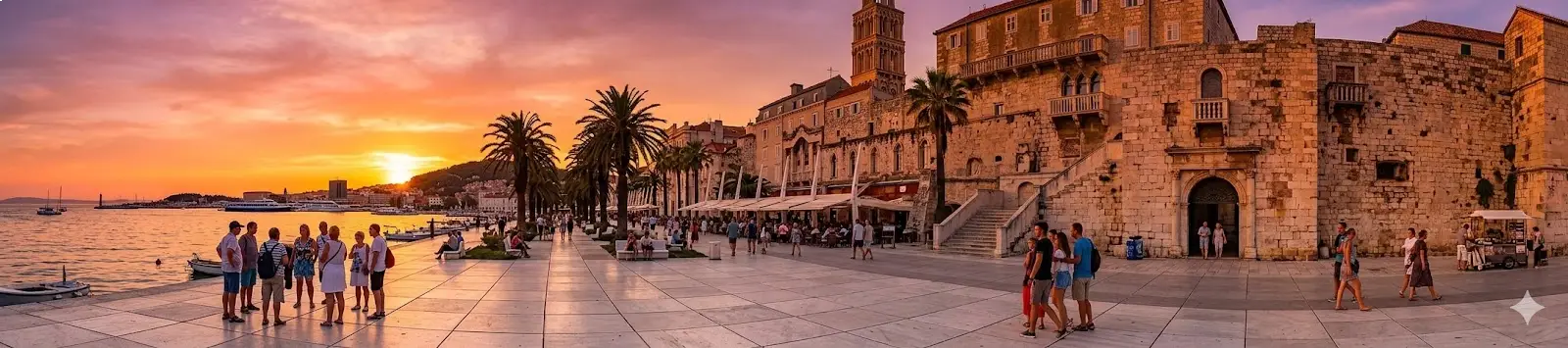
The Riva — formally the Obala Hrvatskog narodnog preporoda — is the beating heart of Split's social life. This 200-metre palm-lined waterfront runs along the south face of Diocletian's Palace, directly on the seafront. In the morning locals walk to work along it; by evening it becomes a parade of Split life — families, students, tourists, fishermen and old men playing cards. Sit at any café, order a coffee, and watch the world pass by. The views from the Riva across to the islands of Brač and Šolta are spectacular at sunset.
A forested peninsula rising 178m — Split's green lungs. Hiking trails, viewpoints, small chapels and a tiny beach at the tip. The best free view in the city is from Telegrin summit.
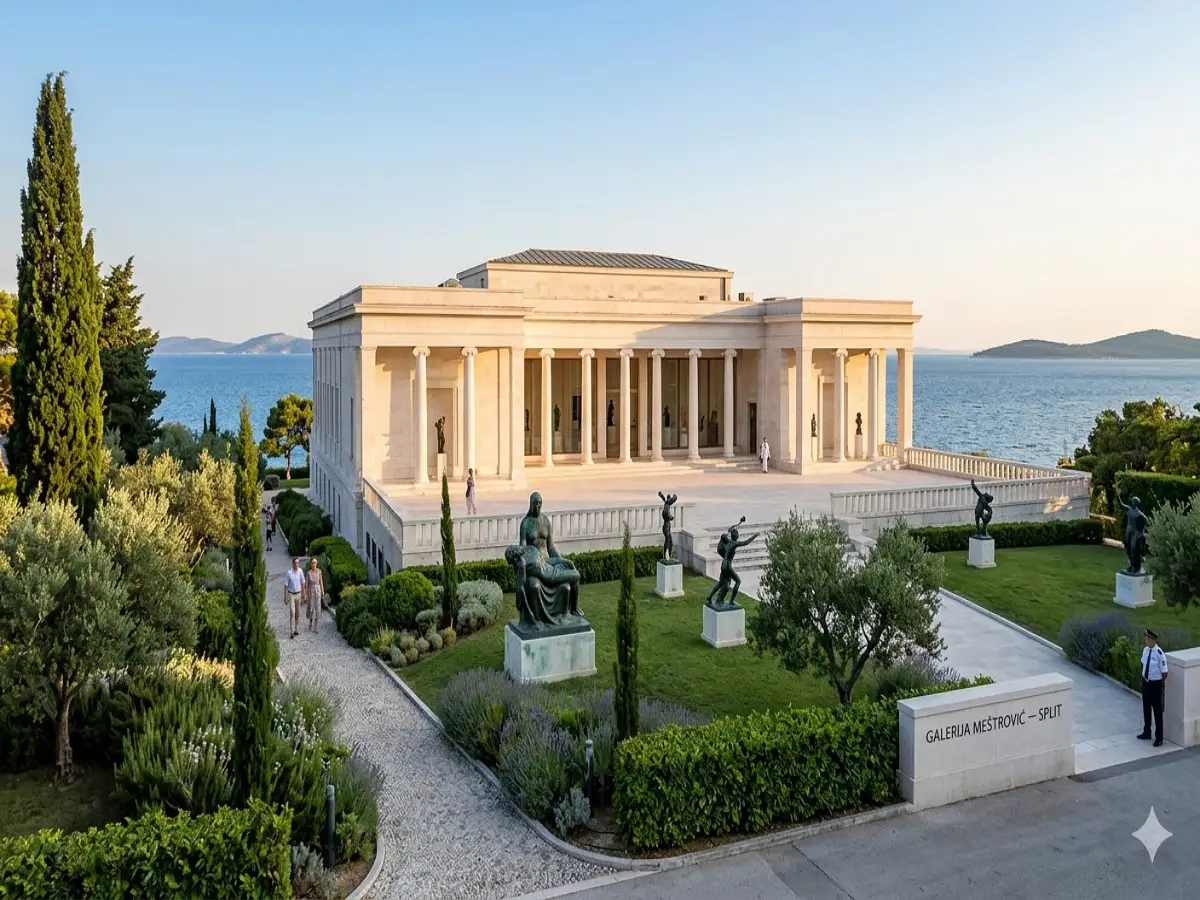
Croatia's greatest sculptor built this magnificent seafront villa as his home and studio. Now a gallery of over 200 works — bronze figures, reliefs and furniture in a stunning seaside setting.
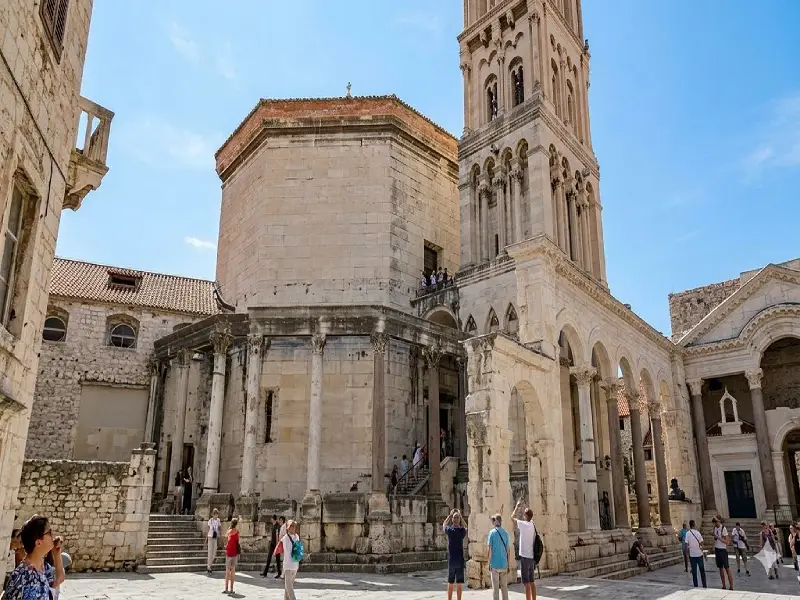
Built inside Diocletian's own mausoleum — one of history's great ironies, as the emperor persecuted Christians. Climb the Romanesque bell tower for the best views over the palace rooftops.
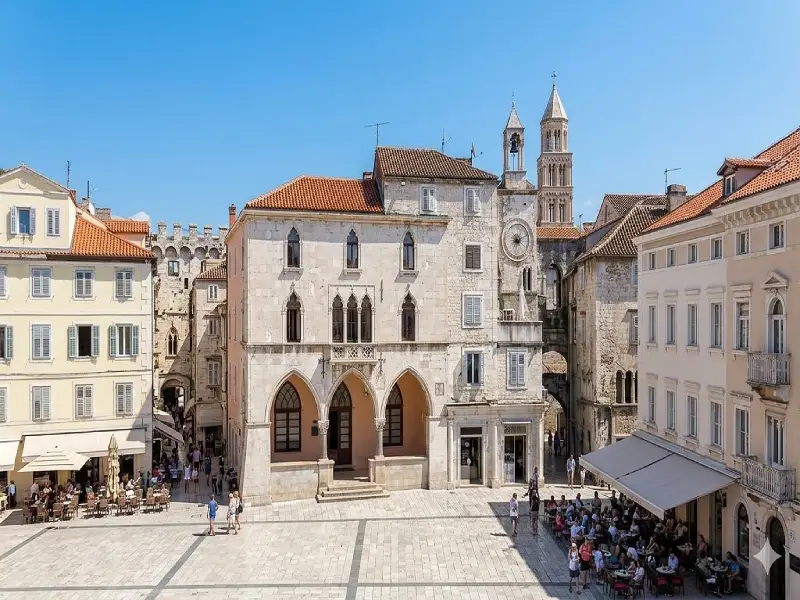
The main medieval square outside the palace, ringed by Gothic and Renaissance buildings. The 15th-century Town Hall, Venetian loggia and clock tower create one of the finest public spaces in Dalmatia.
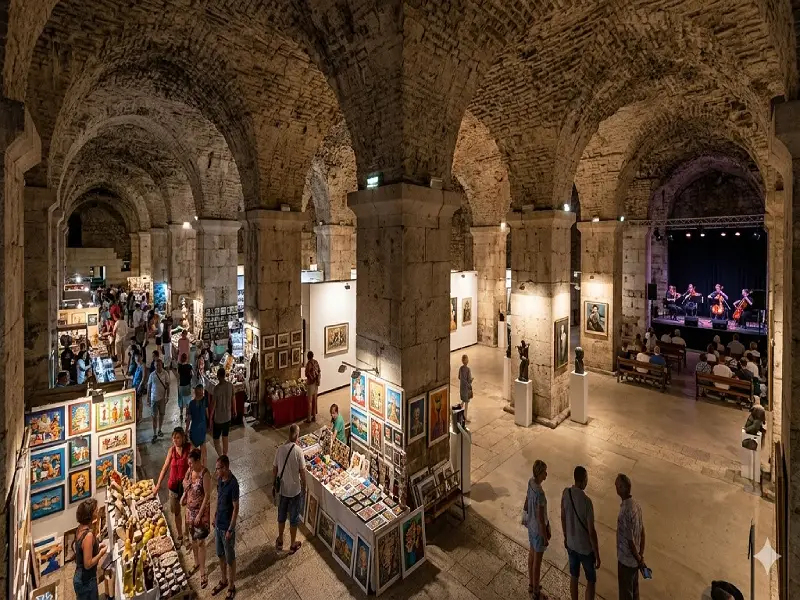
The vast subterranean halls beneath the palace give a remarkable sense of its original scale. Today they host exhibitions, concerts and one of Split's most atmospheric markets.
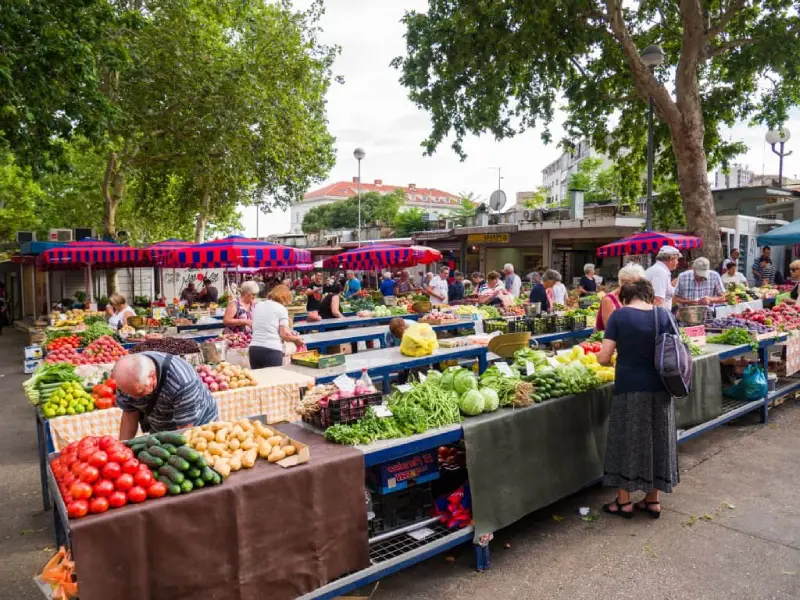
Just outside the Silver Gate, this daily morning market is where Split shops. Fresh vegetables, local cheese, honey, lavender, figs and whatever is in season. The authentic pulse of the city.
Split is surrounded by beaches — from the famous sandy bay at Bačvice to secluded coves on Marjan Hill, each with its own character.
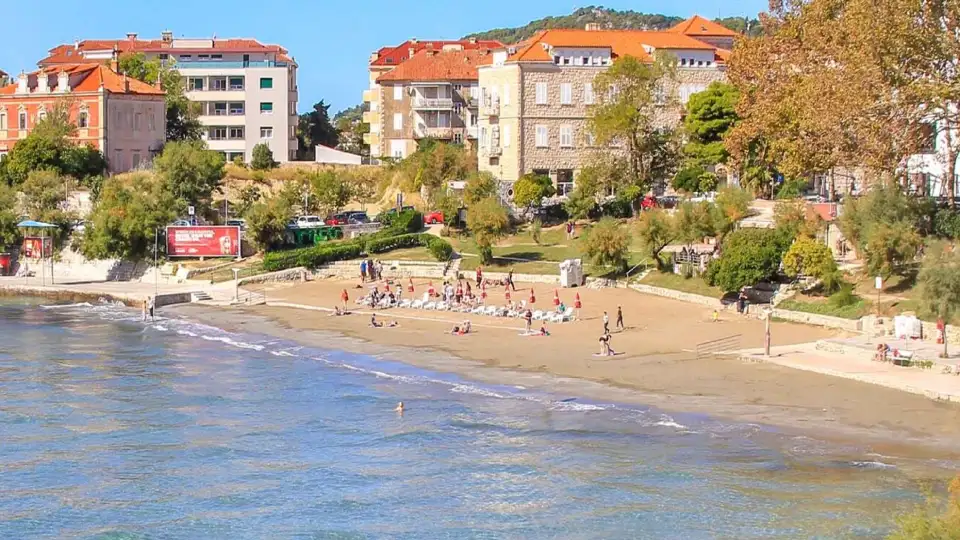
Split's most famous beach — shallow, sandy and 10 mins from the palace. Home of the traditional picigin ball game. Lively beach bars by night.
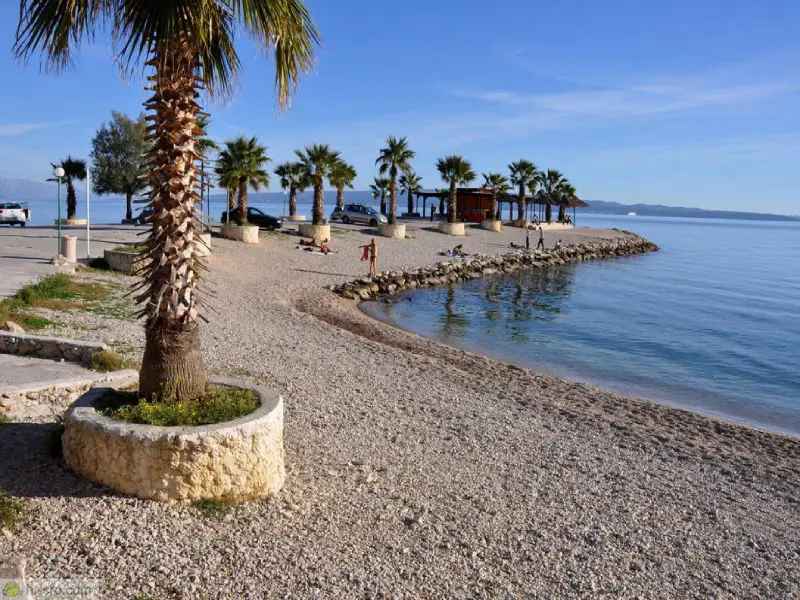
A lovely pebble beach near the Meštrović Gallery — less crowded than Bačvice, crystal clear water and beautiful sea views across to the islands.
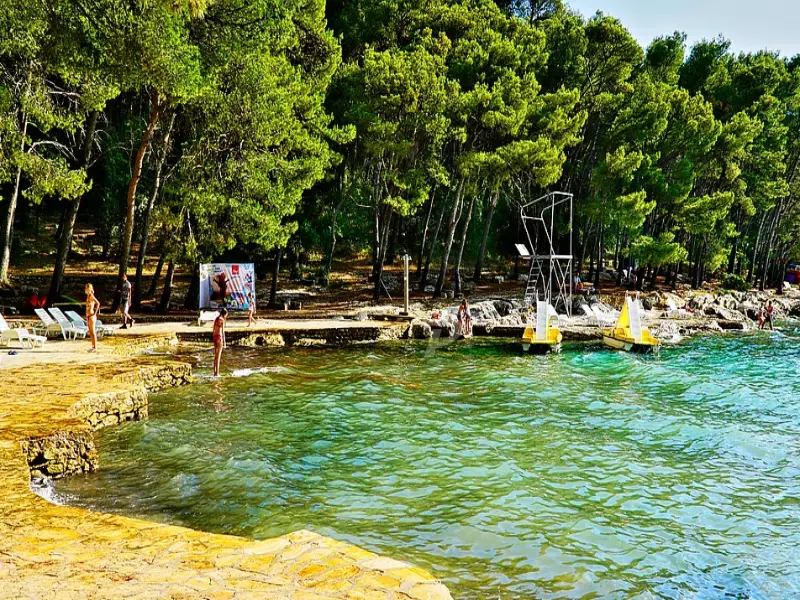
At the tip of Marjan peninsula, backed by fragrant pine forest. Very popular with families — sports facilities, cafés and excellent snorkelling.
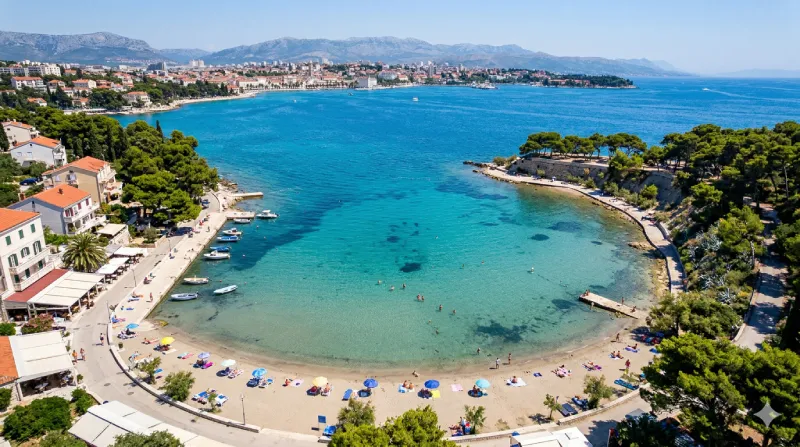
A sheltered bay east of the city — calm, family-friendly and less touristy. Ideal for swimming and relaxation away from the summer crowds.